Tuesday, October 31, 2017

Our National Parks and Monuments Need Our Attention

"Wilderness is not a luxury but a necessity of the human spirit." — Edward Abbey

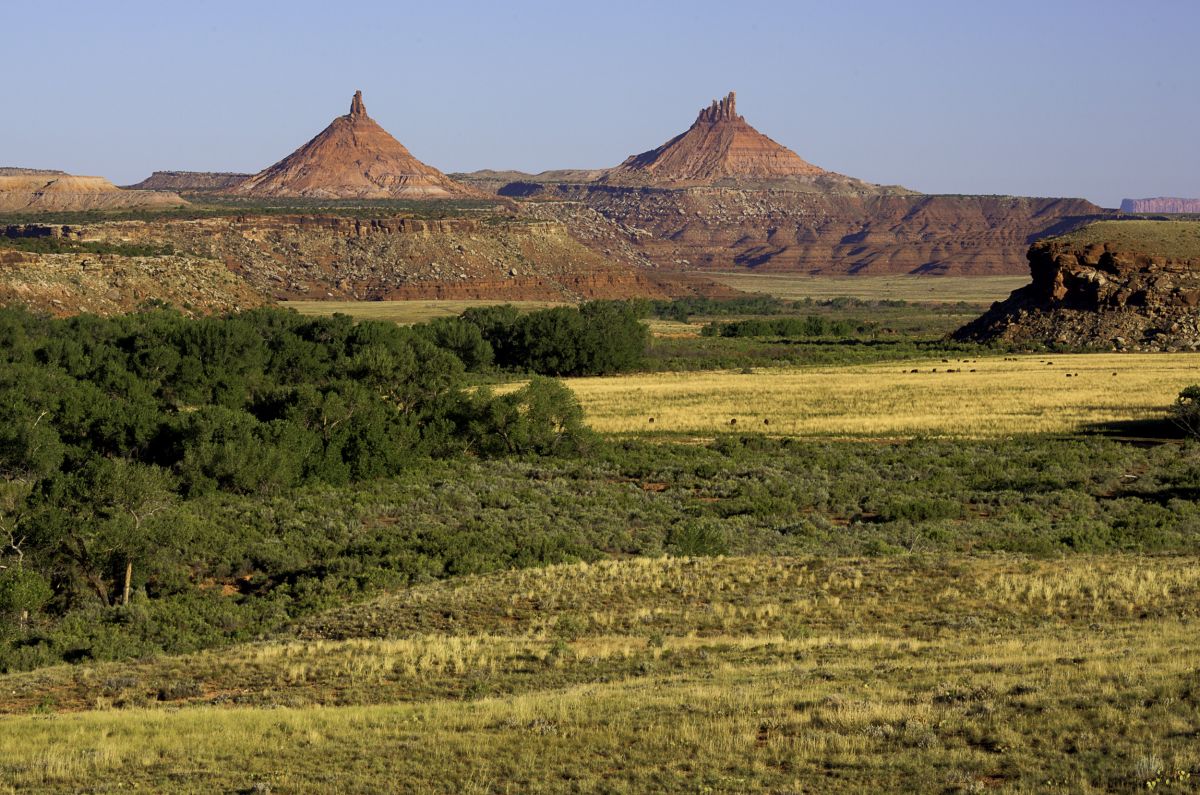
https://angeles.sierraclub.org/sites/angeles.sierraclub.org/files/Indian_Creek_in_Bears_Ears_National_Monument.jpg
Bears Ears National Monument Photo: SierraClub.org
The above quote accompanied a recent daily environmental news site. How true this statement is. Its importance rings true particularly in light of Trumps call on Friday to Senator Orrin Hatch of Utah where he told him that he will soon be announcing his plan to reduce the boundaries of Bears Ears national monument which was designated in 2016. This area of over 1.3 million acres contains ancient artifacts and land that is deemed sacred to several American Indian tribes. According to several news reports Trump told Hatch “I’m approving the Bears Ears recommendation for you, Orrin.” A statement such as this is typical of the president, where decisions appear to be made for an individual or particular special interest group instead of looking at issues holistically and how a decision or policy might impact not only people today, but also future generations. 

Last week I attended the Nature Conservancy's last movie in their Future of Nature series. An American Ascent aired at the Red River Theatres, Concord, and was followed by a discussion on inclusion of American Urban minorities in the environmental movement. The movie is a documentary about nine African Americans who together climb Denali, North America's highest peak in Alaska. The movie was made to show that participation in outdoor adventures is open and achievable by all who have the desire. Hopefully a new generation of young people, who may never have visited a national park or wilderness area, will be moved to step outside and experience the wonders that nature has to offer.

The Beauty of Spring in Grand Teton National Park
Whether it be a National Park, National Monument, Wilderness or Conservation area, our nation's public lands need to be protected and need to be a welcoming place for all. Any move by the current Administration to reduce the size or protections of our national monuments will certainly be met with legal challenges.

Further, our national parks are in desperate need of funding to address much needed repairs and improvements. In spite of this, the president's proposed fiscal year 2018 budget includes a 12% cut to the Department of Interior. To address this deficit, the National Park Service is proposing significant increases in entrance fees at seventeen popular parks during peak season. The current recommendation is to increase the vehicle fee to $70, which is more than double the current fee of  $30. There is no question that our public lands need additional funding, but instead of increasing fees investments in these precious resources should be a priority for our government since the payback is more than can ever be counted. Our National Parks instill a sense of awe and wonder and inspire all who visit. It is important that the entrance fees do not impose a barrier to any citizen who may already feel that a trip to a park is out of reach.

So, please contact the president, write your congressional representative, and support environmental organizations that work toward the conservation and management of public lands. Further, write the National Park Service and tell them to keep our parks affordable. See https://www.nps.gov/orgs/1207/10-24-2017-fee-changes-proposal.htm for how to provide comments on the new fee structure. The deadline for feedback is November 23rd.  

Tuesday, October 24, 2017

Everything is Confused this Fall

There is a monarch transforming inside

At the very end of September I spotted a monarch chrysalis attached to our bulkhead. I have now seen all three stages of this butterfly in our yard this year, starting with a gorgeous caterpillar
in July (see July 4th post). Then in August an adult was sipping nectar in the garden (see August 29th post.)

I was certainly not expecting to find a chrysalis during this time of year and I was worried that it would freeze before it had a chance to transform. In fact, a few days later it got very dark and I thought that maybe it had died, but it was actually the butterfly developing inside because on October 5th, this is all that was left -

Empty Monarch cocoon
I am happy that the butterfly emerged, but I wonder if it was too late in the year for it to survive the long migration to Mexico. With the frequency and severity of hurricanes this year, perhaps it was a good thing that this butterfly got a late start.

Now, three weeks later, we have yet to experience cool days and cold nights that are typical of Autumn. In fact, this past weekend both days were over seventy degrees. We have only had two mild frosts so far. Both required me to scrape my car windows, but neither killed my tomato or basil plants. This has been a very strange fall indeed. Although the shorter days signal to the plants and animals that summer has ended, at night the crickets are still chirping and the moths are still flying around the outdoor lamps. It definitely feels more like early September than late October.

The plants in the yard are confused too. This is the first year that I remember Lavender plants having a second bloom cycle.
Lavender blooming October 22nd
And even stranger than that are yellow flowers on a Forsythia bush.

The color of the leaves indicate that summer is over, but why is this Forsythia blooming in October?
I don't have to type the words "Climate Change" to make the point that the seasons are not what they used to be. Nature is responding and as pleasant as this warm weather may seem, the long-term consequences may not be. 

Monday, October 16, 2017

EPA Approves Spraying of Dicamba for Another Year


Dicamba Damaged Soybeans (photo: University of Missouri)
This summer farmers filed a record number of complaints to EPA and state agencies related to crop damage suspected from drift as a result of the aerial spraying of weed killers formulated with  dicamba. As a result lawsuits by farmers have been filed against the manufacturers of the chemical,  Monsanto, BASF, Dupont and Pioneer, and the Arkansas State Plant Board voted in September to ban the chemical application on crops from April to November. A public hearing has been set for November. EPA, however, announced on Friday that dicamba formulations designed to be used with specially engineered herbicide resistant soybean and cotton seeds could continue to be sprayed throughout next year's growing season with certain restrictions such as training and certification for applicators, record-keeping, and prohibitions on applying during certain time of the day or when wind speeds exceed 10 miles per hour. 


According to EPA Administrator Scott Pruitt "Today's actions are the result of intensive, collaborative efforts, working side by side with the states and university scientists from across the nation who have first-hand knowledge of the problem and workable solutions. Our collective efforts with our state partners ensure we are relying on the best, on-the-ground, information."

 Of course the manufacturers are pleased with the decision, with Monsanto's spokesperson, Scott Partridge, stating that he expects the planting of their dicamba-resistant soybean seeds to double next year to 40 million acres. Farmers who do not want to purchase the specially formulated seeds are not convinced that the new EPA restrictions will be adequate in protecting their own crops against incidental damage and feel that they may be forced to buy the resistant seeds to stay in business. Read NPR story here: http://nhpr.org/post/ok-epa-use-controversial-weedkiller-expected-double#stream/0.

In the meantime, researchers continue to study alternatives to controlling weeds on soybean crops.   North Dakota State University’s Carrington Research Extension Center conducted trials by planting Rye as a companion crop alongside soybeans and found multiple benefits. In addition to the suppression of weeds, the rye helps prevent soil erosion and can also be harvested as forage, providing additional income.

Bees need a variety of flowers to flourish
Do we really want to keep creating herbicide resistant seeds which promote the planting of mono-culture crops and the lose of biodiversity that comes along with it? As we have seen with glyphosate and other weed killers, weeds will eventually become resistant and new stronger chemicals will need to be created.  In addition to herbicide drift, beekeepers have also reported adverse impacts in the production of honey from bees located near dicamba-treated fields. It is suspected that the lose of nectar from the "non-desired weeds" is the cause. To some, weeds are only seen as something to be destroyed. However, in the complexity of nature, destroying one element, will result in some impact(s) to another. The preferred option should always be to try and work with nature and not against it. Unfortunately when profits are at stake it can be difficult to make the right choice when a short-term solution is presented and the potential long-term consequences are hidden or ignored.

Tuesday, October 3, 2017

October Hike Spaulding Mountain

Sunday my friend Sue and I completed our last 4000 hike for the season - Spaulding Moutain in the Carrabessett Valley of Maine. This was our fourth time, parking at the end of the Caribou Valley Road, with it's potholes and precarious stream crossings. Actually, since our first trip to hike the Crockers in 2014, significant repairs to the road have been made, so that the drive was not as bad as expected. In the past, we have driven the four hours to this area and completed our hike all in one day. But, we have learned that this resulted in a late morning start, and a drive back through moose country at dusk. This resulted in a long journey with white-knuckled driving as moose would walk, and sometimes run directly in front of our car. To avoid dealing with these near misses, for the past two trips we have driven up the day before and spent the night at a nearby hotel. In August we stayed at the Herbert Grand in Kingfield Maine before hiking Mount Abram. For this trip, the Herbert Grand was full, so we stayed in Rangeley at the Saddleback Inn, a basic two story motel that offers a fantastic view of the lake. The accomodations were adequate, however the Pop-Tarts and bagels, do not count as breakfast in my book, so we had eggs down the hill at Rangeley's Moose Loop Cafe.

Sunset on Rangeley Lake
This plank takes the guess work out of where to cross
I did not sleep well Saturday night and woke up feeling under the weather. I was not sure that I would even be able to start the hike, let alone finish it. But it would have been hard to have come all that way and then to turn around. I am glad that I persisted, but it was slow going. We completed the nine-plus mile round-trip hike in eight hours which is almost two hours over book time. This hike is completely on the Appalachian Trail (AT) and is not one to be taken lightly. The crossing on the South Branch of the Carrabassett River was easy since the water was low and someone had installed a single plank between two large boulders. Immediately after crossing the river the trail climbed moderately and then steeply. There was little opportunity for a cardio warmup.

The climb up was grueling and great caution needed to be taken on the descent.
The first 2.3 miles we had done before two years earlier when we had hiked Sugarloaf. In retrospect, it is best to do these two mountains together and only do this stretch once. If you are in shape and can spot a car, you could add Mount Abram as part of a traverse. Another option to consider is to hike over Sugarloaf using one of the ski trails and then continue on the AT toward Spaulding.

Surprisingly, few trees had changed color. It has been unseasonably warm, and although there was frost on our windshield in the morning, there have been few nights below freezing. So, even though the days are getting shorter, the temperature is not signaling the leaves to stop their production of chlorophyll. It was a perfect day for hiking though - comfortably cool and clear.

There are some beautiful views on this stretch of the AT
Although there were no red leaves, the crimson berries of Mountain Laurel and Mountain Ash provided plenty of color.
Mountain Laurel (left) and Mountain Ash berries
After reaching the junction for the Sugarloaf summit spur, we beared right to stay on the AT. Although the section to Spaulding involves a descent and then a climb, it was not difficult. What is disappointing is the sign at the top of the mountain that reads the height as 3988 feet. According to one blogger, this peak was added to the AMCs New England 4000 footer list in 1998. Apparently recalculated USGS measurements have it at 4010 feet, which is what is shown in the Maine Mountain Guide. It would be nice for us peak baggers if the Maine Appalachian Trail Club agreed and replaced their sign. 

From a stamina perspective, I was happy when we started heading down. My knees on the other hand felt differently. We took it easy, but were still surprised that it only took us a half hour less to descend than to climb. We are happy to be done and to say goodbye to the Carrabassett Valley. If all goes well next year we will tackle the mountains of Baxter State Park!


Wednesday, September 20, 2017

Birds in Idaho - Part 2

Western Tanager near the Greenhorn Trail, in Hailey, Idaho
 This is my third post of the interesting birds we observed on our vacation to Utah, Wyoming and Idaho this summer, and the second post that focuses on the birds of Idaho. After traveling through the Grand Tetons and Yellowstone National Parks, we spent the second half of our vacation in Idaho. From the barren land of Craters of the Moon National Monument, to the beautiful Sawtooth Mountains, and then the cliffs of the Snake River Birds of Prey National Conservation area we saw some interesting and unique birds.

Idaho has an abundance of rivers, in fact it has the most river miles of any state in the country.  It is revered by fisherman and provides great habitat for birds and other wildlife..

Osprey definitely find ample opportunity to fish. On our way to Craters of the Moon, we took the Mesa Falls Scenic Byway. Our first stop was at Upper Mesa Falls located at Henry's Fork of the Snake River. This pair of osprey found a perfect perch to build a nest.
A well maintained boardwalk provides access to a closeup look at the falls that drop 114 feet.


The next day we spent the morning at Craters of the Moon, one of the national monuments that was on President Trump's list for reevaluation. Fortunately, no changes to its designation were recommended by Secretary of Interior Ryan Zinke. We were warned that the temperature can sometimes be unbearably hot, so I put on my shorts, but it was definitely a hat and gloves day, being both cold and windy!

Standing in front of lava formations at Craters of the Moon National Monument
In spite of the seemingly inhospitable environment here, over 200 species of birds have been identified. During the short time we were there, I only saw a handful of different species and I am thinking that the wind was a factor.

A colorful Mountain Bluebird at Craters
The Clark's Nutcracker is the size of a jay and is grey with black wings. This one was hiding in the thicket
Another interesting birding area we visited was less than an hour drive from Boise - the Morley Nelson Snake River Birds of Prey National Conservation Area, where more than 700 pairs of raptors nest each spring along the Snake River Canyon.

Snake River Canyon
Although we didn't see many raptors it was still an amazing place to visit. The first birds that we saw were ravens, although they are not technically birds of prey, this area provided a perfect habitat for them. Down by the river we saw dozens flying around the cliffs.  Based on their size and the apparent coaxing of their parents, I suspected that these nesting Ravens were ready to take flight within hours. I have written previously about the intelligence of these birds so it was disheartening to learn that in 2014 the State of Idaho was granted a permit by the U.S. Fish and Wildlife Service to kill 4000 Ravens in an attempt to reverse the decline of Sage-Grouse. I am not sure if the plan was ever implemented.

Parent and "baby" Raven
In addition to birds, the conservation area is home to many mammals and herps (e.g. reptiles and snakes.) The Lizard below crossed our path. It had beautiful blue dots on its back.

Common Side-blotched Lizard

We followed the road down the canyon to a dam and the Swan Falls Picnic area where we ate our lunch. This is the site of the Swan Falls Hydroelectric Dam operated by Idaho Power.

The Swan Falls Dam hydroelectric plant was built in 1901 and is now a museum
It was a beautiful spot for a picnic and there were several female Barrow's Goldeneyes swimming on the river.  
This Barrow's Goldeneye has a quizzical look
After we finished our sandwiches, we continued on the road along the river. The road turns to dirt and becomes narrow, but is still easily passable. Not surprisingly, we saw another osprey and nest.
The rope adds some color to the nest, but I wonder if it's a safety hazard to birds that may get caught up in it.
The topography at the end of the road was very interesting and another reminder of how varied the landscape is in Idaho. The road finally ended, so we turned around and continued on to our next destination, Celebration Park.
These rock formations looked like giant's feet
Dirt road along the Snake River

On the drive we saw a Long-billed Curlew, a species of concern in Idaho.

Long-billed Curlew

Celebration Park
Celebration Park is an archeological site, with a 10,000 year old history of nomadic tribes living in the area. It is also on the Idaho Birding Trail.
There is a museum on the premises and a visitor center where there are maps, but it was closed when we arrived. Because of this, we did not know exactly how to get to the rocks with the petroglyphs, for which the park is most known. Instead, I took a random walk toward the cliffs to see what I could find. Immediately, I saw a Peregrine falcon, but it flew either into one of the many rock crevices, or around the side before I could capture a photo. The rock formations themselves were very interesting and there were lots of cliff swallows flying around and as I got closer, I could see the colony of nests.

A colony of Cliff swallows
I was so preoccupied watching the birds, that I did not notice the snake coiled on a rock slab to the right of the nests until I started gathering photos for this blog.

Snake at Celebration Park. 

You can not see its entire body, but it was either very long, or there was a second snake behind it. Also I am not sure if it was a Gopher snake or a Rattlesnake since they are both known to inhabit the area. I am just glad that it was a distance away.

It was late afternoon by the time we left the park to return to Boise. We decided to make one last birding stop at the Deer Flat Wildlife Refuge. Our timing was not good again, as the visitors center was closing just as we pulled into the parking lot. Because of this, we only stayed briefly and did not observe the many water birds for which the refuge is know. We did see several Magpies, and even though it's a common bird in the West, they are beautiful and entertaining to watch.

Black-billed Magpie
I realize now that this blog could have probably been divided into two. We also visited the Sun Valley/Ketchum area where we went on a three mile hike in Hailey. The photo at the beginning of this blog was taken from that trip. Idaho is a beautiful state and the birds that can be found their reflect that beauty.

Wednesday, September 6, 2017

Quinoa with Dried Cherries Served with Bannock

These two recipes were in a recent AMC Outdoors magazine and are meant for backpackers since the ingredients are easy to carry and to prepare. They sounded so good that I made them at home. Both tasted delicious and I can only imagine how good they would be after a long day on the trail.


Quinoa with Dried Cherries 
Ingredients
2 cups quinoa
3 Tablespoons olive oil
1/4 cup onion (dried flakes if packing)
1/4 cup chopped dried cherries
1 Tablespoon dried mint or 2 Tablespoons fresh
1 Tablespoon dried parsley or 2 Tablespoons fresh 
3/4 cup pistachios, chopped
-Rinse and drain quinoa then add 4 1/4 cups water to pot, with all ingredients except pistachios. Bring to a boil and simmer covered for 15 minutes. Remove from heat, add nuts and let sit for 5 minutes, then serve with Bannok.
 Bannock
 Ingredients
2 cups flour
4 teaspoons baking powder
1/2 teaspoon salt
3 Tablespoons butter
1 cup water
-Mix dry ingredients, then gradually add water until you can pick up with your hand. Knead on floured board about 12 times, adding more flour as needed. Pat a handful of dough into a circle.  Melt butter in cast iron skillet and fry dough about 5 - 10 minutes each side until cooked through. Best served warm, but can be saved for later.

Tuesday, August 29, 2017

Anise Hyssop


Monarch on Anise Hyssop
If you are looking for a fast growing colorful plant to attract pollinators and that has multiple uses, then consider Anise hyssop (Agastache foeniculum). It is a native plant of North and Central America which became popular with colonists as a bee plant which result in honey with an anise flavor. You only need to purchase one plant as it readily reseeds itself - almost too prolifically. This can be a problem is you are not diligent and pull up unwanted strays. I have found that once established it is carefree and just needs a sunny or partly sunny location.

This large clump of Anise Hyssop self-seeded itself in the vegetable garden from another plant several yards away. You can see several smaller clumps starting as well.

This plant attracts multiple pollinators and it is not uncommon to see numerous bees and butterflies sipping the nectar of the flowers. I was so happy to see the monarch above land on the flower the weekend before last. It is nice to know that our yard is becoming a habitat for these butterflies with the milkweed being used as food for the larvae and other flowering plants in the garden attracting the adults. I am not sure exactly when the monarchs will begin migrating South, but I imagine they need plenty of fuel to travel the over 2,000 miles to Mexico.

Native American also used Anise hyssop as a medicnal herb. The leaves have antibacterial properties and when taken as a tea it can relieve congestion. The purple flowers are a nice addition to cut flower arrangements and last a long time in a vase of water. As a culinary plant, the leaves can be used in vinegar for salads, as a cordial when steeped with alcohol, or candied for dessert. The flowers can also be eaten fresh and are used in salads and drinks.  Some describe the flavor as a combination of licorice, tarragon and basil.

I have only used the plant as an ornamental, but am looking forward to tasting the leaves and flowers when they are fresh earlier in the season.