Sunday, April 22, 2018

Celebrate Earth Day!

Today, April 22nd we celebrate this precious planet that we call home. This year's Earth Day theme is "End Plastic Pollution." That is a bold statement, since this material has become so ubiquitous in our lives. According to the Earth Day Network, the organizer of Earth Day events across the globe, their goals for 2018 "include ending single-use plastics, promoting alternatives to fossil fuel-based materials, promoting 100 percent recycling of plastics, corporate and government accountability and changing human behavior concerning plastics."

By simply becoming more conscientious in our shopping and disposal decision, we can all make a difference. Although I am a good steward of the environment, and if you are reading this blog, you are too, I have learned that I can always do better. As I reported back in January, recycling plastic bags and wraps is one of those ways. So many things come wrapped in plastic, like our daily newspaper delivery. In addition to reusing these bags to pick up pet waste, I collect the extras and recycle them at our local grocery store. It amazes me how much plastic wrap I collect within just a few days.

Plastic wrap awaiting recycling.
When possible, I try and purchase items without extra wrapping. If I feel that items are unnecessarily wrapped in plastic I contact the manufacturer and let them know. Your voice as a consumer can influence their sustainability goals, particularly as the problems of plastic pollution in the oceans has become more publicly recognized and as outlets for recycling these materials become more scarce.

If possible, try and get outside today and enjoy the signs of Spring that are emerging, from the sounds of peepers and wood frogs, to the smells of the soil as it comes alive, to the sights of the first daffodils, there is much to celebrate. And, don't forget to bring a big to pick up those plastic containers on the side of the road that are now visible since the snow has melted.

It won't be long before these daffodils are in bloom.


Tuesday, April 17, 2018

Shrimp on Bed of Zucchini


A light and simple weeknight meal which uses a bed of zucchini in place of pasta or rice.


Ingredients:
1/2 cup onion
3 cloves garlic
fresh parsley (1 - 2 Tablespoons)
3 Tablespoons butter
4 Tablespoons olive oil
1/2 teaspoon salt
1/2 teaspoon cracked pepper
1/2 cup white wine
juice from 1/2 lemon
1 cup Panko crumbs
1 medium zucchini
1 pound peeled and deveined shrimp

Grease large casserole dish. Shred zucchini in food processor, set aside. Chop onion and garlic. Melt half the butter with the oil and saute onions for about 3 minutes and then add garlic and stir for 30 seconds. Season shrimp with salt and pepper and add to skillet. Cook 2 minutes, then turn and cook for an additional minute. Remove shrimp. Add lemon juice and wine to pan, stirring until it begins to butter. Add remaining butter and oil and stir until melted. Place shrimp in casserole dish, then add zucchini, mix slightly and poor sauce over both. Return pan to medium low heat and add panko, stirring until golden. Sprinkle over the top of dish and bake at 400 degrees for 12 minutes or until bubbling. Serve immediately with parsley sprinkled on top.

Sunday, April 8, 2018

Looking for Signs of Spring

April is an unpredictable month. The sun definitely shines a bit brighter and the longer days indicate that winter is past, but sometimes the season just doesn't want to let go. That was the case this past weekend. We drove North to Vermont Friday afternoon and encountered snow most of the way. Saturday morning the sun was out briefly, but snow returned throughout the day as the temperature remained below freezing. 

The wind blows snow across Lake Memphremagog

Nevertheless, Saturday afternoon I put on my hat and mittens and walked along the lake looking for some signs of Spring. The nice thing about early Spring is that trees and brush take on a different appearance before their leaves come out and I realize that although the landscape may initially appear dull and uninteresting their is actually lots of color to be seen.

The branches of Red-Osier Dogwood stand out among other wetland plants in Spring

One of the most recognizable wetland species and a welcome sign of spring are the fuzzy white catkins of pussy willows.


Pussy willows and clouds are a nice contrast to a bright blue sky

It's amazing that the berries of this viburnum were able to survive the cold and wind of a very long winter.

Post-Winter berries of viburnum

Although most of the lake was still covered with ice, fishermen were out drilling holes through the ice Saturday morning, there were some open areas of water. This was fortunate for those migratory birds that decided to return before ice-out.

Canada Geese and a Mallard brave the cold water in April

If you have been near water this month, you have probably heard some red-winged blackbirds. Another common bird that you may here this time of year are Common Grackles.  These two were making quite a racket as they perched at the top of a tree.

Common Grackles 

Even though I won't be putting away my winter clothing yet, I know that the upcoming days will continue to reveal the sights and sounds of a new season of life.


Saturday, March 31, 2018

No Market for Glass?

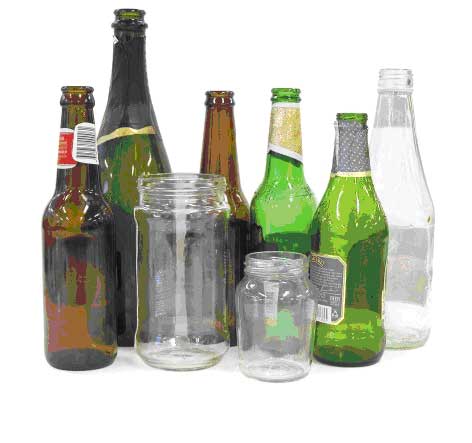
Glass Bottles
Recyclable glass containers. (source: Montana Dept. of Env. Quality, deq.mt.gov

A recent news article announcing that our neighboring town, Hooksett, is no longer accepting glass for recycling left me puzzled. Glass - which is 100% recyclable and for me is the preferred packaging material for public health as well as environmental reasons. Further, with an increasing public awareness of the huge plastic pollution problem in our oceans, it would seem that glass would be a commodity increasing in demand. According to the Glass Packaging Institute, (GPI) glass "can be recycled endlessly without loss in quality or purity." Their website also contains some interesting facts
  • Recycled glass containers are always needed because glass manufacturers require high-quality recycled container glass to meet market demands for new glass containers.
  •  Recycled glass is always part of the recipe for glass, and the more that is used, the greater the decrease in energy used in the furnace. This makes using recycled glass profitable in the long run, lowering costs for glass container manufacturers—and benefiting the environment.
According to the Town of Hooksett, their decision to no longer accept glass for recycling is that   "Glass has always been hard to find markets for but with local glass disposal sites closing down we have no markets at all." How can this be? It all comes down to economics. The way that most communities in the state are collecting recyclables is through single stream, where plastic, cans, paper and glass are all mixed together. Although this gets recycling rates up, the value of those materials is diminished. For glass, it needs to be clean, a certain size, and separated by color to be used in the manufacturing of new glass bottles. When recyclable waste streams are mixed together, chances of contamination are higher and the end use of the materials becomes limited. Apparently a bottle manufacturing plant in Massachusetts recently closed down which has further reduced the market for recycled glass in New England. According to the Concord Monitor one of the reasons for the plant's closure was the increase in the craft beer market and the subsequent decline in the sales of national beer brands. This I don't understand; don't craft beer makers need bottles as well?

In any event the economics are complicated, but tossing recyclable materials into the trash is short-sighted. According to the GPI, Over a ton of natural resources are saved for every ton of glass recycled and one ton of carbon dioxide is reduced for every six tons of recycled container glass used in the manufacturing process. According to the Montana Department of Environmental Quality, recycling one glass jar saves enough energy to power a computer for 25 minutes. There are clearly environmental reasons to use and recycle glass. What can we do? New Hampshire is a state that does not have a beverage container redemption program. States with container deposits and redemption programs recycle glass containers at a 39% higher rate than states without such programs. It reduces roadside litter and provides jobs, a win win. However, numerous attempts to adopt legislation in the "Live Free or Die State" have failed, but if such a bill did pass it would reduce the economic burden currently being placed on municipalities which are forced to make decisions based solely on local budgets.

As I have posted previously, the use and disposal of plastic exposes people and wildlife to toxic chemicals and plastic debris is causing havoc to our oceans. Glass may be heavier, subject to breakage, but most won't dispute that food and beverages taste better when stored in glass. Further, it is a known fact that hormone disrupting chemicals can leach from plastic containers. We need to remember that consumer demand can and should direct manufacturing. All types of waste needs to be reduced and recycling is one mechanism to do this. Make known to your town that you want comprehensive recycling options available in your community. If your town stops the curbside collection of glass, please encourage them to offer, at a minimum, a drop off location that is convenient for its residents. Tossing more waste in the trash to be incinerated or landfilled is not an environmentally responsible solution for our generation or the future of the planet. Saving a few dollars today only postpones additional costs to some time in the future. 


Sunday, March 11, 2018

Chicken and Sweet Potato Stew

Chicken and Sweet Potato Stew

In addition to cookbooks and the internet, the newspaper is also a great resource for recipes. This recipe from a recent edition of the Concord Monitor was a hit the other night.

Ingredients:
1 ½ pounds boneless chicken breasts cubed
3 Tablespoons oil
1 small onion chopped
2 cloves garlic minced
1 Tablespoon fresh ginger peeled and chopped
1 teaspoon ground coriander
½ teaspoon cumin
¼ teaspoon turmeric
¼ teaspoon cinnamon
4 cups chicken broth
1-14.5 ounce can diced tomatoes
1 sweet potato peeled and cubed
2 cups chopped spinach, kale or other greens
1 orange or yellow pepper chopped
⅓ cup peanut butter
Salt and pepper
2 cups cooked rice

In a heavy soup pot heat 1 Tablespoon oil and brown half of chicken. Remove and repeat for remaining chicken. Set aside and keep warm. Add 1 Tablespoon oil. add onion and saute until softened, then add garlic, ginger and spices and cook for 30 seconds. Then add canned tomatoes with juices, broth, and remaining ingredients, including chicken. Cover and simmer for about 30 - 45 minutes until chicken is cooked through. Stir in peanut butter and cook until smooth. Season with salt and pepper. Serve over rice.

Thursday, March 1, 2018

I Love Nature Because it Makes Me Feel Good

EPA recently published on article title "Are Greenspaces Good for Your Heart" which reported on two recent studies that support the notion that being exposed to "Green Spaces" leads to healthier outcomes in people's lives. One study showed an inverse relationship with sudden deaths and greenway density and forest cover.  Another study showed positive effects on people of natural ecosystems when evaluating certain types of illnesses. While you are pondering this, enjoy the warm feeling that watching this video invokes.


Saturday, February 24, 2018

2018 Great Backyard Bird Count

Update:  Check out the official results at GBBC 2018 Summary

Last weekend, birdwatchers from across the globe turned their attention to their own yards to identify species and count their numbers. It's a fun event and regardless of experience, anyone can participate. The best part - you don't have to leave the comfort of your home.  The event ran for four days from February 16 - 19. I logged in two to three checklists a day from Saturday thru Monday. The weather changed drastically over the weekend, from sunny and mild to cold with several inches of snow.
Saturday morning
Sunday morning

Although it seemed like there were fewer birds at the feeders this year, I did identify 12 individual species. Here is what I saw:

Black-capped Chickadee


Chickadees, the quintessential bird feeder bird, were particularly scarce.  None of the three birds that I saw the entire weekend remained still for long to capture a good photo.

Dark-eyed (slate-colored) Junco
 

 By far the most common bird of the weekend were the Juncos, with 14 appearing at one time. They enjoy picking the ground for food, but will also eat from the feeder. Although I can't distinguish the difference, the males are more prominent here in the winter as the females will migrate further south where there is less competition for food (1).

Northern Cardinal


The cardinals never disappoint and have been faithful visitors all winter long. They are also very accepted by other birds as is evident from their willingness to share the feeder with smaller birds.

Blue Jay


Although similar in size and shape, unlike cardinals, Blue Jays do not like sharing food with others.

Tufted Titmouse


Mourning Dove


The unobtrusive Mourning Dove is a soulful bird. When not feeding underneath the feeders, they are often seen keeping a watchful eye from the roof of our house. Unfortunately, due to their abundance, around 40 states allow hunting of doves. I am happy that New Hampshire is not one of them.

Suet attracts many birds, but is a favorite of woodpeckers in the winter. We typically have three species that visit regularly.

Red-bellied Woodpecker


A bird that has gradually expanded its range north, the red belly of this woodpecker is more difficult to see than it's red nape. 

Downy Woodpecker

Male Downy Woodpecker

Hairy Woodpecker

Hairy Woodpecker-Male

Hairy Woodpecker-Female
At a quick glance, it may be difficult to distinguish between the Downy and the Hairy Woodpecker. But once you see them together, you will notice the size difference. Not only is the Hairy about three inches longer, its bill is also larger. In both species, only the male has a red patch on the top of its head. 

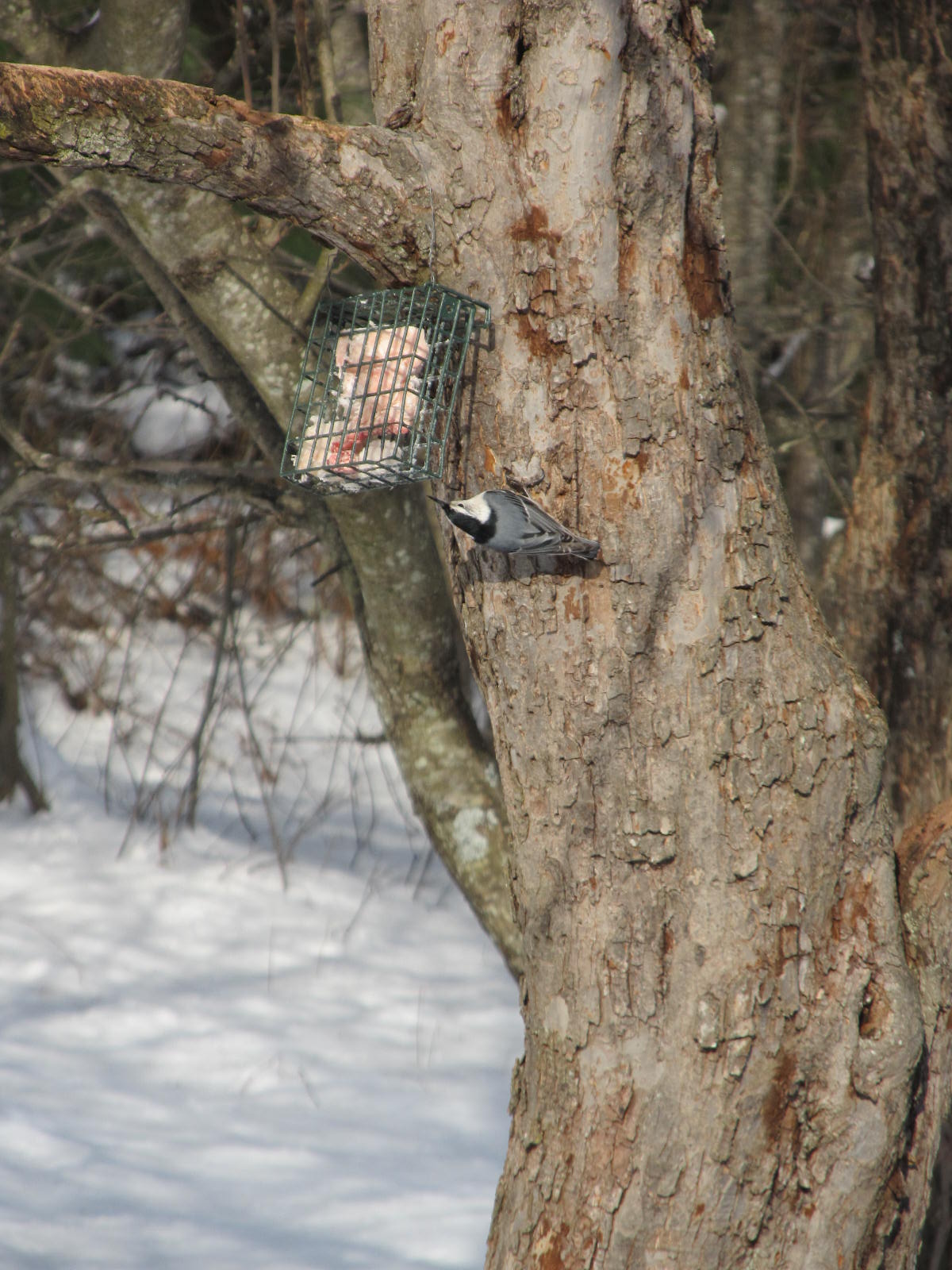
White-breasted Nuthatch


Although not a woodpecker, the behavior of nuthatches is similar, climbing up and down trees searching for food. Nuthatches often travel facing downward. Unlike woodpeckers which use their tail to assist, they climb using only their feet. They are also are one of the few species of birds that have been observed using a tool to assist with feeding. They may take a piece of bark and use it to excavate for food on the trunk of a tree (1). 

White-throated Sparrow


Sparrows are one of those birds that may be easy to disregard. However, each species is unique and worthy of a closer look. Only one sparrow visited the feeder last weekend. In addition to the white throat, this sparrow has an attractive yellow patch over its eyes.

House Finch

 
I am not one hundred percent certain of this identification and even though New Hampshire's state bird is the Purple Finch, I believe that the two pairs that visited our feeder last weekend were House Finches. The male House Finch doesn't have a red back and has more distinct stripes on its belly.

Finally, birds were not the only visitors to the feeders. Where we used to have Red squirrels in our back yard, that has changed in recent years to Gray Squirrels which definitely consume more of the food intended for the birds. Although I could do without them, It is fun to watch their agility and acrobatic maneuvers.


The squirrel on the left seems to be patiently waiting his turn, while the one on the right is not in any hurry to finish eating.

And, evidence of increasing winter temperatures, is the fact that a chipmunk was seen below the feeder last weekend. Chipmunks typically hibernate during the winter, only awaking every few days, to eat food they have stashed and to defecate. A study at Fordham University (2) observed that as winter temperatures warmed, some chipmunks did not hibernate or awoke earlier from hibernation. Unfortunately, for those that did not hibernate, they did not survive the winter. A sobering thought for other hibernating species as global temperatures warm.

Chipmunks should not be out and about in February
Footnote:
(1) The Sibley Guide to Bird Life & Behavior, David Allen Sibley, 2001 
(2)  https://legacy.fordham.edu/campus_resources/enewsroom/archives/archive_1094.asp